
The short answer
Start with four checks: the ice maker is switched on, the freezer is at about 0°F, water is reaching the refrigerator, and nothing is jammed in the ice maker or bin. If all four check out and there’s still no ice, or water is leaking, the water valve, fill tube, ice maker or dispenser needs testing.
Jump to: No ice · Slow or small ice · Clumps · Bad taste · Dispenser · Leaks · Noises · When to call
Four checks before anything else
Is the ice maker switched on? Depending on the model, you turn it off by raising a wire arm on the side of the ice maker, with a switch on the ice maker itself, or with a button or icon on the control panel. On some models a lit “Ice Off” light means it’s off. It’s easy to switch off by accident, so check this first.
Is the freezer cold enough? Manufacturers generally recommend about 0°F. Ice makers wait for the freezer to get cold enough before they cycle, so a warm freezer means slow ice or none. If a freezer thermometer reads warm, set the control a degree or two colder and give it about a day. If it still won’t get there, the problem is cooling, not the ice maker.
Is water reaching the refrigerator? Make sure the shutoff valve on the water line is fully open and the line behind the refrigerator isn’t kinked or pinched, especially if the refrigerator was moved or pushed back against the wall. If the water dispenser is slow too, the cause is usually upstream of the ice maker: the water filter, the supply line or the water pressure.
Is anything jammed? Ice makers stop when they sense a full bin, so a clump of ice holding up the sensor arm, or a bin that isn’t seated properly, can stop production. Push the bin all the way in and clear any clumps by hand.
New refrigerator, ice maker or water line? Give it time. Most manufacturers say to allow up to 24 hours for the first ice and two to three days for a full bin, and to throw out the first ice it makes. Air in a new water line can also cause a few short or empty fills at first.
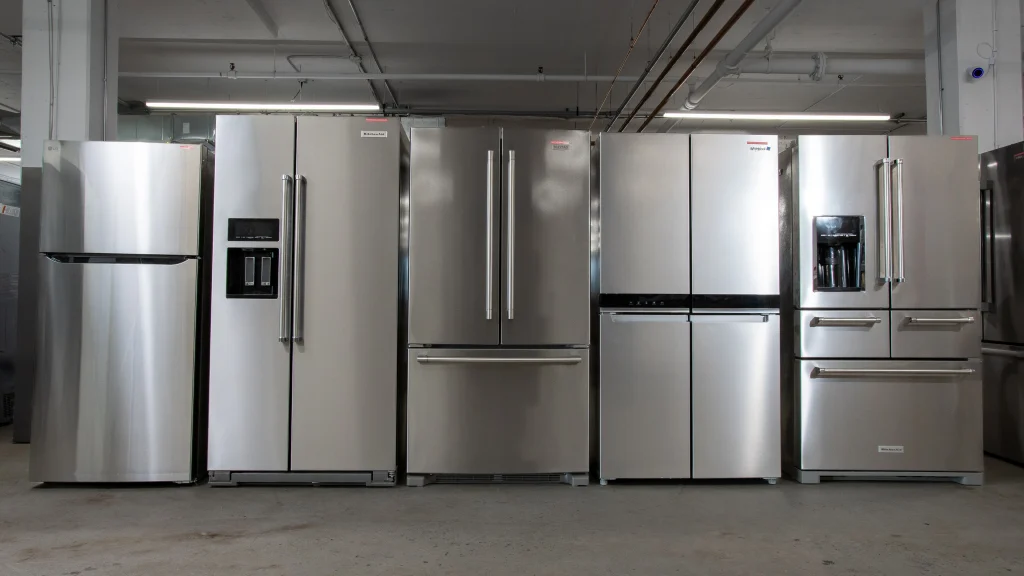
Side-by-side, French-door and top-freezer refrigerators put the ice maker in different places, so the checks start with your model.
Ice maker not making any ice
If those checks pass and the bin stays empty, look at the ice maker itself if you can see it. An empty, dry tray means water isn’t getting in. A tray full of frozen cubes that never drop means the ice maker isn’t finishing its cycle.
No water getting in: the usual causes are a closed or partly closed supply valve, a kinked line, a frozen fill tube, a failed water inlet valve, or water pressure too low for the valve to work. The water dispenser can keep working even when the ice maker’s fill tube is frozen, so a working dispenser doesn’t rule it out. A frozen fill tube is often a symptom of something else, such as low pressure, so thawing it may fix things only for a while.
Ice made but never released: the ice maker may not be starting its harvest, either because the freezer isn’t cold enough or because the ice maker or its control has failed. Some ice makers have a test or reset button. Use it only as your manual describes, and don’t press it again and again: on some models that overfills the tray.
Leave these to a technician: a frozen fill tube (clearing it usually means removing the ice maker), pulling out a built-in refrigerator, and anything involving the water valve. Don’t chip at ice with a knife, screwdriver or ice pick, and don’t aim a hair dryer at the ice maker or bin. Manufacturers warn against both.
Slow ice, small cubes or hollow cubes
Small, thin or hollow cubes usually mean the tray isn’t filling all the way. The common causes are an old or clogged water filter, low water pressure, a partly closed supply valve, a kinked line, or a self-piercing saddle valve on the water line. Small cubes also make production look slow, because it takes more of them to fill the bin. GE notes that a freezer set colder than about −10°F can cause hollow cubes, too.
What you can check: replace the water filter if it’s due (most brands say about every six months) and make sure the new one is seated properly. Afterward, run water through the dispenser as your manual directs; GE suggests about 2 gallons and LG 2 to 3. If a reverse-osmosis system feeds the refrigerator, GE says it can cut the water pressure roughly in half.
Check the water pressure: requirements vary by brand, from a minimum of about 20 psi on some models to 40 psi on others. If cubes stay small with a new filter and a fully open valve, a plumber can test your pressure.
Some slowdown is normal. Room temperature and how often the doors open affect how much ice a refrigerator makes. A party, a hot week or a freshly emptied bin can outpace it. A nearly empty freezer can slow ice on some models, and GE suggests keeping it about three-quarters full. If production stays low through an ordinary week with a cold freezer and good water flow, the water valve or the ice maker may be at fault.
Clumps, frozen-together cubes or a jammed bin
Cubes that sit in the bin slowly fuse together, especially when ice isn’t used often. Even the freezer’s normal defrost cycle can soften the top layer. A power outage, a door left ajar or a door seal that lets humid air in will melt the ice and refreeze it into a block.
What you can check: empty the bin, throw out the clumps, then wash the bin and dry it completely before putting it back. If you don’t use much ice, empty the bin every couple of weeks, or turn the ice maker off until you need it. Break up clumps by hand or with a plastic utensil, never anything sharp.
When it’s a repair: if clumps or a solid block keep coming back with normal use, the ice maker may be overfilling, a door may not be sealing, or the freezer may not be holding its temperature. Those need a diagnosis.
Ice that tastes or smells bad
Ice soaks up odors from the freezer, so old ice and open or spilled food are the usual causes. Throw out the stored ice, wash the bin, clean up spills and keep strong-smelling food in sealed containers. Ice that gets used regularly stays fresher.
An overdue water filter, new plumbing or the home’s water itself can change the taste, too. Replace the filter if it’s due, run water through the dispenser, and throw away the first few batches after a new filter, a new refrigerator or new plumbing. Whirlpool also notes that softened water can affect the taste.
A quick test: pour a glass from the water dispenser. If the water tastes fine but the ice doesn’t, look in the freezer first. If both taste off, the filter or the water supply is the likelier cause.
The dispenser won’t give ice
What you can check: make sure the controls aren’t locked (many models have a lock or child-lock button you hold for a few seconds to release), the doors are fully closed and the ice bin is seated. Then take the bin out and look for clumps or a cube jammed at the chute. Clear a jam with a wooden or plastic utensil, never a knife or an ice pick.
If the bin is full and nothing is jammed but no ice comes out, listen when you press the paddle. A motor that runs without delivering ice can mean the bin isn’t fully seated or the ice has fused together; silence points to the dispenser switch, motor or control. A little frost on the chute flap is normal, but a flap that won’t close, or ice packed in the chute, isn’t.
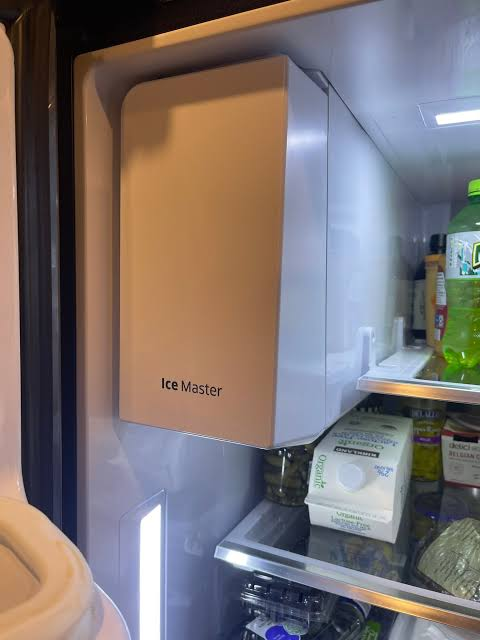
Ice maker in the refrigerator door? On many French-door models the ice maker sits in an insulated compartment in the fresh-food section or its door. Light frost there can be wiped away. If the ice maker is frozen over or the bin is frozen in place, don’t force the bin or use a hair dryer; Samsung, for one, says that needs service. Frost that keeps coming back usually means warm air is getting in: a refrigerator that isn’t level, doors that don’t line up, or a worn compartment seal.
Water leaking, or ice where it shouldn’t be
Water on the floor, water in the ice bin or ice building up under the ice maker usually traces back to a loose water-line fitting, the water valve, the fill tube, a blocked defrost drain or a refrigerator that isn’t level. Water pressure that’s too high or too low can make the tray overfill, and air in the line after a filter change can cause drips until it’s flushed out.
If water is on the floor: don’t touch a wet plug or outlet. Turn the ice maker off, shut off its water supply and wipe up the water. Note whether it comes back when the ice maker fills; that timing helps the diagnosis.
Ice that keeps building up around the ice maker or fill tube often comes from a valve that drips between fills, or from warm, moist air getting past a seal. Melting it away treats the symptom; finding the source fixes it.
Ice maker noises: what’s normal
Normal: a short buzz or hum when the water valve opens to fill the ice maker, clicks during the cycle, and the clatter of cubes dropping into the bin. GE says the fill buzz happens about every hour to hour and a half while the ice maker is working.
No water line? Turn it off. An ice maker left on without water buzzes or chatters each time it tries to fill. GE and Frigidaire both say to switch the ice maker off if the refrigerator isn’t connected to water.
Worth a closer look: chattering while you dispense water can point to a kinked line. Grinding from the dispenser, or a valve that buzzes but never fills the tray, is worth a call. Tell us when the noise happens.
When it’s really a refrigerator problem
The ice maker depends on the freezer. If the freezer is warmer than it should be, frost is building on the back wall, or ice cream is soft, the ice maker is just the first thing you noticed. See refrigerator repair and freezer repair, or call us.
Garage refrigerators: Oklahoma garages run hot in summer and cold in winter. Many refrigerators aren’t meant for spaces that drop below about 55 to 60°F unless they’re rated for garages (GE and Whirlpool list 38 to 110°F for their garage-ready models), and room temperature affects how much ice a refrigerator makes. If a garage refrigerator slows down or stops making ice when the weather turns, check the temperature range in its manual.
When to call, and what to tell us
Call us when the ice maker is on, the freezer is cold and water reaches the refrigerator but there’s still no ice; when water is leaking; when the dispenser runs without delivering ice; or when ice or frost keeps building up in the same place.
Have the model and serial number ready, and tell us what you’ve noticed: no ice or just a little, whether the water dispenser works, when the filter was last changed, and anything that changed recently, such as a move, a power outage or plumbing work.
We repair refrigerator ice makers, water valves and dispensers in Edmond, Oklahoma City and nearby communities, including Samsung refrigerators and built-in Sub-Zero ice makers. We find the cause first and give you a written price before any repair. Contact us to set up a visit.
Questions we hear from owners
How long does a new ice maker take to make ice?
Most manufacturers say to allow up to 24 hours for the first ice (LG says it can take up to two days) and two to three days for a full bin. Throw out the first ice it makes, and check your manual for your model.
Can a water filter stop my ice maker?
It can. A clogged or old filter, or one that isn’t seated properly, restricts the water and can cause small cubes, slow production or no ice. Replace it about every six months, or as your manual says, and run water through the dispenser afterward.
Should I turn the ice maker off when I’m not using it?
Yes, if the refrigerator isn’t connected to water or the water supply is shut off. It also helps when you won’t use ice for a while; LG suggests turning it back on a day or two before you need ice.
Why does my ice maker keep freezing up?
Frost or ice building up around the ice maker usually means warm, moist air is getting in, from a refrigerator that isn’t level, doors that don’t line up or a worn seal, or that the ice maker is overfilling. Light frost can be wiped away. If the ice maker is frozen over, have it checked rather than chipping or heating it.
Is it worth repairing an ice maker?
That depends on the cause and the refrigerator’s condition. A diagnosis tells you whether it’s a setting or supply issue, a part such as the water valve or the ice maker, or a cooling problem, and we give you a written price before any repair so you can decide.
Edmond · Oklahoma City · Nearby communities
Still no ice?
Tell us the model and what you’re seeing, and we’ll plan the visit. Service call fee waived with completed repair.
Schedule a service visitPrefer to talk? (405) 534-4788
More help for your kitchen
Related guides: Undercounter ice machine making less ice · How to clean an ice machine · LG refrigerator not cooling · Sub-Zero refrigerator not cooling. You can also browse all appliance repair guides or view our appliance services.
Owner resources
GE Appliances: ice maker doesn’t fill with water
GE Appliances: hollow, mushy or small ice cubes
Whirlpool: ice maker not working
Samsung: ice maker is not working
LG: refrigerator not making ice or not making enough
Sub-Zero: ice maker does not make ice
Owner checks are general guidance. Follow the use-and-care guide for your exact refrigerator.