
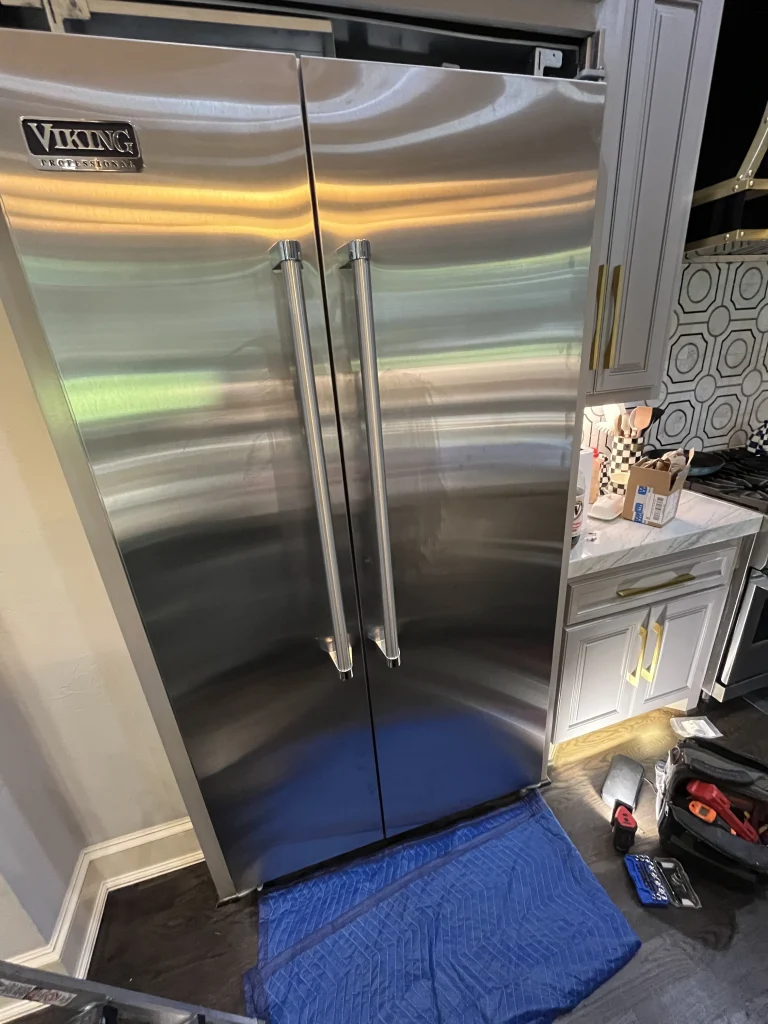
You open the refrigerator and notice the milk feels warmer than usual. Maybe the freezer still seems cold, or the entire appliance has started warming up. Either way, refrigerator cooling problems deserve prompt attention.
The cause can be something straightforward, such as a blocked air vent, an incorrect setting, or a door that is not closing completely. Other problems require testing a fan, defrost component, control, or compressor.
Start by protecting your food and measuring the temperature. Then work through the accessible checks below. This guide explains what to look for, what different symptoms can suggest, and when to arrange professional refrigerator repair.
First, Protect Your Food and Check the Temperature
Keep your refrigerator at 40°F or below and your freezer at 0°F. Use an appliance thermometer to check the actual temperature. A number on the refrigerator’s control panel may represent the selected setting rather than the temperature around your food. The FDA’s refrigerator food-safety guidance explains why an independent thermometer matters.
If the refrigerator is warming up:
- Keep the doors closed as much as possible.
- Move vulnerable foods, including meat, milk, eggs, and leftovers, to a working refrigerator or an ice-filled cooler that maintains 40°F or below.
- Discard perishable food that has been above 40°F for two hours or more.
- If you cannot establish how long perishables have been warm, discard them. Do not taste food to determine whether it is safe.
An initially cold, unopened refrigerator can generally keep food cold for about four hours during a power outage. That does not give you four additional hours after discovering an already-warm refrigerator. The temperature history matters. See the USDA’s refrigerator temperature guidance.
Six Checks for Refrigerator Cooling Problems
1. Confirm the Temperature Settings
Check both the refrigerator and freezer controls. A setting may have changed during cleaning, while loading groceries, or after a power interruption.
For many models, approximately 37°F in the refrigerator and 0°F in the freezer is a suitable starting point. Follow your owner’s manual, especially if the appliance uses a numbered dial.
After a routine adjustment, temperatures need time to stabilize. Whirlpool recommends allowing 24 hours between adjustments. Keep vulnerable food somewhere safely cold during this period, and arrange service promptly if an established refrigerator has stopped cooling altogether. See Whirlpool’s temperature-control guidance.
2. Check Power and Cooling Mode
Look for an illuminated display or interior light. If the appliance appears completely unpowered, check whether there has been a household power interruption and whether the plug is securely connected, if safely accessible. If the power is back but the refrigerator still isn’t cooling, see what to check after a power outage.
A working light does not confirm that cooling is enabled. Some refrigerators have a showroom or demo mode that allows the display and lights to operate while cooling is disabled.
For example, certain Samsung models display “OF OF,” “O FF,” or similar indicators in Cooling Off mode. Consult the instructions for your exact model before pressing button combinations. Samsung’s cooling troubleshooting guide explains these indicators.
3. Clear the Interior Air Vents
Locate the air openings inside both compartments. Large containers, grocery bags, and tightly packed shelves can obstruct circulation.
Move food away from the vents and leave room for air to travel around stored items. Check the freezer as well as the refrigerator; their airflow may be connected.
For example, a large package pushed against a rear vent can interfere with cooling even when the appliance is running. Vent locations vary, so use your model’s manual to identify them. GE Appliances recommends checking for containers that block airflow.
4. Inspect the Doors and Rubber Seals
Check for food packages, drawers, or shelves that prevent a door from closing completely. Then inspect the rubber gasket around each door.
Look for:
- Food residue along the sealing surface.
- Tears, splits, or visibly distorted sections.
- Gaps where the gasket should contact the cabinet.
- A drawer or door that remains slightly open.
Clean dirty seals with mild soapy water and a soft cloth, then dry them. A paper test can help identify a loose area: close the door on a strip of paper and gently pull. Little resistance can indicate a sealing or alignment problem, but it does not identify the cause by itself. Samsung provides door-seal inspection guidance.
5. Check Whether Your Condenser Requires Cleaning
Dust and pet hair can restrict heat removal on refrigerators with accessible condenser coils.
Check the owner’s manual before attempting to clean them. Some models have coils intended for homeowner maintenance; others have enclosed arrangements that do not require routine cleaning.
When your manual permits cleaning, disconnect power first and follow its access instructions. Use the recommended brush or vacuum attachment gently, and reinstall any removed grille before restoring power. Avoid bending tubing or reaching into moving or electrical components. Whirlpool’s maintenance guidance describes cleaning for applicable models.
For an installed or panel-ready appliance, ask about built-in refrigerator repair if maintenance access is unclear.
6. Review the Installation Location
A refrigerator must release heat into the surrounding room. Blocked exterior ventilation or an unsuitable location can affect cooling.
Check the installation manual for required clearances. Requirements differ between freestanding and built-in appliances, so a generic spacing recommendation may not fit your refrigerator.
For a garage refrigerator, also check the permitted ambient temperature range. Seasonal heat or cold can put the installation outside the appliance’s operating limits. GE’s cooling guidance identifies both installation temperature and ventilation as factors.
What Different Cooling Symptoms Can Mean
Your observations help narrow the investigation. Record which compartment is affected, its measured temperature, and when the change began.
| What you notice | What it can suggest | Useful next step |
|---|---|---|
| Refrigerator is warm; freezer remains cold | Restricted airflow or a problem affecting the refrigerator compartment | Clear accessible vents and measure both compartments |
| Both compartments are warm | Cooling is disabled, heat removal is restricted, or a cooling component has failed | Check controls, doors, and permitted maintenance items |
| Heavy frost covers vents or an interior panel | Moisture entry or an icing problem is interfering with airflow | Photograph the frost and arrange diagnosis if it persists |
| Unusual noise occurs alongside rising temperatures | A fan or another operating component may need attention | Record the sound and temperature readings for the technician |
These are starting points for diagnosis. Several failures can produce similar symptoms; Whirlpool identifies fans, compressors, and start relays among components that may require professional testing.
Why Can the Freezer Stay Cold While the Refrigerator Gets Warm?
Refrigerator designs differ. In many single-evaporator models, air circulates between the freezer and fresh-food compartments. Restricted airflow can therefore affect the refrigerator even while the freezer remains cold.
Other models cool the compartments through separate evaporators or airflow arrangements. A cold freezer does not establish that every part serving the refrigerator compartment is working. GE explains these different airflow designs.
Depending on the model, a technician may investigate the fan, air damper, temperature sensing, or defrost operation. Describe the symptom and provide the model number before purchasing replacement parts.
Why Does Frost Matter?
Ice covering an air passage can continue blocking circulation after you move food away from the vent. Check for a door left ajar or a damaged seal, and photograph the frost before it changes.
Follow the manufacturer’s defrost instructions if defrosting is recommended. Do not chip ice away with a knife or use a hair dryer or heat gun. Samsung specifically warns that a hair dryer can damage the refrigerator. See its frost troubleshooting guidance.
If heavy frost returns, arrange a diagnosis of the underlying cause.
When Is Professional Repair Needed?
Contact a repair technician when the refrigerator remains too warm after the accessible checks, cooling repeatedly stops, or heavy frost returns.
Internal diagnosis may involve electrical measurements, fan testing, controls, compressor operation, or the sealed refrigeration system. These repairs require appropriate tools and training. Whirlpool recommends professional service for internal cooling-component failures.
Have these details ready:
- Brand and model number.
- Actual refrigerator and freezer temperatures.
- When the problem began.
- Any displayed error code.
- Photos of frost or a recording of an unusual sound.
- Whether the appliance was recently moved or lost power.
Frequently Asked Questions
How Long Should I Wait After Changing the Temperature?
Follow the owner’s manual. Many models need approximately 24 hours to stabilize after a setting adjustment. That waiting period applies to temperature stabilization; food must remain safely refrigerated throughout. Whirlpool explains the adjustment interval here.
Should I Unplug the Refrigerator to Reset It?
Use a reset only when the manufacturer’s troubleshooting instructions recommend it. Photograph any error code first. Samsung cautions that resetting can erase information useful for diagnosis. A recurring cooling problem needs investigation even if a reset temporarily restores operation. See Samsung’s reset guidance.
Does Constant Running Mean the Compressor Is Bad?
Running time alone cannot identify a failed compressor. Some newer refrigerators use efficient compressors that operate for longer periods. Consider the actual temperatures and any change from normal operation. Persistent warmth warrants service. Whirlpool discusses refrigerator running behavior.
Is a Refrigerator With Cooling Problems Worth Repairing?
Start with a diagnosis and written estimate. The decision depends on the failed component, overall condition, repair history, parts availability, and any applicable warranty.
Compare the repair estimate with the full replacement cost, including delivery, installation, and changes needed to fit a replacement. Those installation costs can be particularly relevant for built-in refrigerators.
Refrigerator Repair in Edmond and Oklahoma City
If your refrigerator is still warming up, protect your food and arrange an inspection. Your temperature readings and observations will help explain exactly what is happening.
Near Appliance Repair provides refrigerator repair in Edmond and Oklahoma City, including diagnosis of cooling, airflow, frost, and control problems. We explain the findings and provide a written repair price before work begins.
Call (405) 534-4788 or contact Near Appliance Repair to arrange service. Have your refrigerator’s brand, model number, and symptoms ready when you reach out.